Navigating the Evolving U.S. Food System

As we approach a watershed moment in the U.S. food system—one that will prompt further scrutiny, controversy, new regulation, and a shift in consumer mindset and behavior—it’s important to remember that we’ve weathered these before. Key inflection points in history include the establishment of the Pure Food and Drug Act and Federal Meat Inspection Act (1906), Soil Conservation Act (1936), Environmental Protection Agency (1970), increased rigor around pathogen reduction and food safety (1993), GMO regulation (2000), change born out of COVID-19 food supply disruptions (2020), as well as the emergence of a new international tool —the Clean Food Consumerism scale—in 2025.

What’s curious is the waning consumer confidence in U.S. food safety, while confidence around the safety of imported foods grows.

Source: Food Business News

Ironically, Europeans are skeptical about their food too, and nearly split down the middle on believing it’s safe.

Across continents, concerns are tied to a great number of topics ranging from foodborne illness, carcinogens, pesticides, heavy metals, additives and preservatives to sustainability, packaging and PFAs.

As we await the new U.S. Dietary Guidelines slated for end of year, let’s focus on the positives, as in our new opportunities.

A term originating in nutrition circles in the 1970s that we expect will eventually become part of the consumer vernacular. It has to do with food that provides “significant amounts of essential nutrients per serving,” and has never been more important than in our current GLP-1 era, as users now find themselves undernourished. Fortunately, fortifying products with functional ingredients can strengthen nutrition panels across categories and provide targeted health benefits for some of today’s key concerns, namely:

  • Gut Health. Currently, 8 in 10 Americans report becoming “more interested in foods or products that support gut health.” As consumers recognize the links between the gut microbiome and total health, as well as the difficulty of consuming enough daily fiber, gut health will move from emergent to ubiquitous. Expect more pre/post-biotics claims, ingredients and foods, especially “the four K’s,”—kimchi, kraut, kombucha, and kefir (dairy and water-based)—and fiber-filled whole grains. Particularly intriguing to us is the Olipop brand embarking on a longer-term study to assess its effect on blood sugar and digestion, and inform new claims.
  • Stress, Sleep and Immunity Support. Spate’s new report, overlaying Google and TikTok data to unearth trends, reveals consumers are researching magnesium glycinate, NAD, theanine, colostrum, vitamin K, and Ashwagandha. We also see continued interest around nootropics.
  • Women’s Health. Creatine is one of the buzziest supplements of the year, moving from the bodybuilder segment to menopausal women for aid in muscle tone, strength, recovery, bone density, cognitive function, and more. The ingredient is so popular, it’s achieved over $1.1 billion in sales, and boasts a 25.2% CAGR, with huge potential predicted for fortified food and beverage products.
Legendary Foods Strawberry Pastry with 20g of protein
Image Credit: Legendary Foods

This year, the New York Times, Wall Street Journal and Vox proclaimed Americans “protein obsessed.” They went on to suggest we were eating too much and from the wrong sources, warning specifically against “protein junk food.” Billionaire investor Ron Penna begs to differ, seeing protein-infused indulgence as an unmet need. His company Legendary Foods has been raking it in with “healthier” sweets and snacks.

Within the protein space, we note the following developments:

Questions about the safety of seed oils have led not only food companies to consider replacements, but also restaurants and home cooks. As a result, beef tallow is having a moment. Social listening shows a 135% increase in beef tallow discussion growth, and a 14% increase around ghee.1 In addition, olive oil, avocado oil and butter are thriving.

One of the Top 20 Food Science Trends involves “tailoring nutrition for different life stages, from infancy to old age,” a space with promising implications for brand loyalty.

A McKinsey & Company study released earlier this year reinforces “recyclable” as the single most important influence on consumers when considering sustainability, followed by “made of recycled content,” “compostable,” and “reusable.” There are two brands with some interesting work in this area:

  • Amazon’s Sustainable Materials Innovation Lab is attempting to create recyclable, compostable materials, collaborate on a redesign of the entire plastic recycling infrastructure, AND make them readily available to all companies
  • Keurig’s beta testing of plastic- and aluminum-free coffee pods
Image Credit: Amazon

Reformulation needs are driving sales at powerhouse companies like Ingredion and ADM as manufacturers work to remove artificial ingredients. Hopefully, continued demand will lead to not just profits, but an ongoing reinvestment in additional natural, efficacious solutions.

  • Emulsifiers. The natural emulsifiers market predicts a CAGR of 6.5% from 2026 to 2033. Emulsifiers—key to improving the texture, shelf life and consistency of products like dressings, sauces and dairy alternatives—will increasingly shift to plant, animal, microbial, and seaweed-based versions. One key benefit from this change? Reducing allergens and strengthening allergen-friendly claims in products currently relying on egg yolk and soy-based emulsifiers. Another? Potentially reducing the risk of Type 2 diabetes when consuming products where emulsifiers, colors and sweeteners are combined.
  • Sweeteners. With consumers cutting back and the FDA mandated front-of-pack changes in added sugar labeling, sweeteners are increasing in importance. IFT assures us that breakthroughs in natural sweeteners and flavor-modulating technologies are here, don’t require compromising on taste, and cite fruit purees and vanilla as ingredients that can enhance sweetness without adding sugar. We can continue to expect more natural sweeteners like monk fruit, stevia, maple syrup and agave, but the one that’s really caught our eye is Oobli, an ultra-sweet protein fermented from a West African tropical fruit that can replace up to 90% of sugar in most food and drinks without impacting blood sugar.
  • Colors. Why do we need them? Three key reasons. First, foods lose color in the production process and no longer look “natural.” Second, coloring can provide important experiential cues (e.g., red = spicy) and stimulate cravings. Third, some just make foods and beverages more “fun.” Since they’re not going away, and consumers and regulators are cracking down, demand for natural versions has risen dramatically. Though not as stable as synthetic counterparts, analysts point out an important counterbalance—colorants made from compounds found in fruits and vegetables can offer added health benefits, such as anti-inflammatory agents. Some fruit and vegetable-derived colorants hail from beets, carrots, radishes, tomatoes, and grape skin, while other natural alternatives include turmeric, saffron, paprika, butterfly pea, annatto seeds, chlorophyll, spirulina, red algae, edible grasses, matcha, and even calcium phosphate (to enhance whites). For those not opposed to insect-derived colorants, there’s lac dye and carmine already in use.

To succeed in the above changing landscape, we recommend:

  • Transparency around food safety (in all its incarnations) and where food comes from, as more than one-third report it would increase their confidence
  • Incorporating smart labels to provide detailed allergen info, origin stories, additive explanations and sustainability scores
  • Exploring soft claim innovation, e.g., “supports a cleaner living lifestyle”
  • Well-supported claims that safeguard against litigation, as class action lawsuits were up 58%, particularly those challenging “naturally flavored,” or “made with real fruit,” as well as those alleging “healthy” but containing heavy metals or PFAs
  • Reevaluating caloric content, gastrointestinal-friendly ingredients and portion sizes, in response to GLP-1 user needs
  • Balanced storytelling that also provides front-of-pack real estate for “fast get” convenience claims like “ready in 90 seconds”
  • Investigating distribution in natural grocery channels for key products or reformulated products that meet the criteria, as fresh formats led grocery channel growth in the first half of 2025
  • Adding a “healthy kids” platform to your innovation pipeline—especially in foodservice, where the new administration is “calling on restaurants to participate” and school cafeterias are looking to reduce added sugar and salt, increase whole grains, etc.
  • Incorporating biometrics and psychological data into sensory testing, for a more holistic look at the multisensory experience, as Google Gemini (AI) suggests a future less reliant on taste-panel evaluations alone

1 Tastewise, 2023-2025.

A Comprehensive Look at 2025 Alcohol Trends

According to ScienceDirect, alcohol consumption increases seasonally during warmer months. Since we’re officially living the hottest months of the year, refreshment is top-of-mind. And because we closely follow (and actively work in) the space, we’re dedicating this month to an exploration of what’s cool in alcohol. Pun intended.

NoLos (No and Low Alcohol)

There are various forces driving this change, e.g., a preference for alternatives (e.g., marijuana, cannabis drinks, psychedelics, and kava), federal dietary guidelines encouraging moderation, the U.S. Surgeon General’s request for warning labels linking alcohol to cancer, personal health and wellness goals, and even a decline in social gatherings – especially for Gen Z, dubbed “the homebody generation.” According to the Wall Street Journal, “a growing sober set is taking over mosh pits and football stadiums, partying even harder without booze.” This year, roughly one-half of adults planned to drink less, up from 41% in 2024. That shakes out by cohort as follows:

Source: NC Solutions (NCS), courtesy of Convenience Store News, 1/30/25

While the rising trend has serious implications for manufacturers and beverage programs, it doesn’t mean all is lost.

  • Some consumers opt for zebra-striping behavior, consuming both alcohol and alcohol-free alternatives during the same occasion
  • Global spirits companies like Diageo, have successfully pivoted, with non-alcoholic spirits that outperform their alcoholic sister brands
  • The premiumization of mocktails is driving profit and category excitement, with bartenders “putting more intention behind their NA offerings…thinking as they would about a traditional cocktail menu to ensure flavor, balance, and variety”
  • Functional offerings like Ceybon AF that offer a mix of health and experience via a Chinese medicine-inspired RTD beverage, represent white space in an increasingly crowded NA category
  • The alcohol-alternative beverage market is expected to reach $29 billion by 2026, prompting potentially lucrative mergers, acquisitions and innovation

Looking now at alcohol, we note the following trends:

Mexican Renaissance

The popularity and emergence of Mexican beverages is undeniable. Last year alone we witnessed:

So, what are we seeing now? More of the above, as well as Alma Tepec, a chile liqueur made from Oaxacan, smoke-dried pasillas, and a detour to Spain. Expect more sherry-forward cocktails, quinquina (an aromatized wine akin to vermouth), Basque txakoli wine, The Yayo (popular with Madrileños), and the Spanish version of the G&T – traditionally served in a balloon-shaped glass filled with fruits…sangria style.

Asian Mixology

While last year was dominated by Japanese liquors (sake, Japanese whiskey, and shochu), and cocktails (boba, matchatinis, wasabi-infusions, kakigori-style shaved ice creations, Japanese bitters, garnishes, and mastering Japanese techniques), we also saw the emergence of white spirits from China and Korea (baijiu and soju, respectively), as well as Korean makgeolli (milky rice wine).

In 2025 we see:

  • New York mixologist Jae Bae’s Asian soup-inspired cocktail video series
  • The Korean-inspired Orion Bar (Brooklyn) embracing a spicy ramyun-style brothback, and ingredients like rice, dried magnolia berries, dasima (kelp)
  • Asian bars and bartenders making industry analyst lists in 2025: Almanac (Philadelphia), Kumiko (Chicago), and Christine Kim of Service Bar (Washington, D.C.)
  • Hong Kong hosting the “World’s 50 Best Bars” award ceremony
  • Single-serve, RTD “cup sake”
Image Credit: Jae Bae (배재윤)

Coffee-Inspired

Chances are you’re familiar with Irish coffee, espresso martinis, coffee tonics, and maybe even the revolver, cold brew Negroni, and the carajillo. For this year, let’s add an ube espresso martini, caffè amaro (cold brew, amaro, vermouth, and lemon), and homemade coffee grounds liqueur.

Minis

The mini trend – ordered alone, in flights, or offered gratis by bartenders – continues with:

  • Mini martinis
  • The Chupetini, a 1.5 oz “umami bomb” with herb, habanero and garlic-infused vermouth
  • Bloody mary and mimosa flights
  • Shots galore, e.g., ice-cold vodka with a pickled mushroom, the Snaquiri (daiquiri shooter), coffee liqueur and mezcal, etc.
  • The Aperi-Tea experience at London’s Four Seasons Hotel Tower Bridge, proper tea-friendly bites paired with mini cocktails
  • Wine and spirits in smaller packages at C-stores, as 9 in 10 shoppers are consuming within one hour of purchase

Planet-Friendly

Current buzz is around organic and biodynamic vineyards, regenerative farm crafted beer, sustainable grains like Africa’s fonio, aquafaba – a more sustainable cocktail foam than egg whites, and Target’s new “collective good” wine packaged in paper bottles.

Miscellaneous

Our favorite finds across the industry:

  • Beer. Texas icehouses – wholly unassuming, open-air, community watering holes that over the last 100 years have evolved from selling ice blocks to brews. Local-only beers, produced by smaller breweries and not focused on expansion, as well as cream ales and aromatic, Italian pilsners
  • Martinis. Asian-inspired Lychee, or Cucumber Wasabi flavors, the garlic Parmesan martini at The Red Fox in Boston, the citrus-forward, 50/50 style Kangaroo, a ‘Burnt’ Martini, with a splash of Scotch whisky, a summery, savory Tomatini, cherry martini searches up +80%, and the Adult Happy Meal consisting of a stiff martini and a bowl of fries
  • 2-Ingredient Cocktails. The Black Russian (coffee liqueur + vodka), Spaghett (light beer + Aperol), and Red Eye (beer + tomato juice)
  • Sweet Sips. The creamsicle-inspired Thunderbird, floral, fruity Daffodil, and twists on the tropical Jungle Bird
  • Batched. The never-ending Infinity Cocktail, fractionally blending spirit-only new batches into old batches, to develop layered flavors
  • Bar Kabawa. A destination for rum lovers, from the team at Momofuku
  • Tastings. The $225 multicourse cocktail tasting menu at NY’s Clemente Bar
  • Late Night Happy Hours. A shift from the traditional early evening.
  • Shake Shack’s first-ever restaurant with a full bar, in Atlanta.
  • GRL Power. Melly Barajas, the “queen of tequila,” an all-female distiller of Leyenda de Mexico and named to Forbes 50 Over 50: Global list, and Speed Rack, a global bartending competition for women

The above should give you plenty of conversation starters or places and things to check out. As far as how to leverage this for your business, we suggest the following:

  • Focus on “drink identity,” as some patrons make decisions based on a drink’s name, how it was created or what it’s an homage to
  • Consider menu pairings for NA and low alcohol drinks
  • Innovate in “bar food.” History tells us that tavern snacks included seafood canapés, potted meats or rillettes (French charcuterie), spiced cakes, and deviled eggs that can pair with beer, wine, or cocktails. A more modern take? Gourmet popcorn, frosted nuts, cotton candy and interactive tastings
  • Sponsor a staff “shift drink,” a time-honored tradition of allowing the restaurant/bar crew a simple, less hangover-inducing free drink at closing time
  • Sponsor a bar takeover, or bartender competition
  • Create an official, signature cocktail for a major sporting event, inspired by the staggering success of the Grey Goose “Honey Deuce” at the US Open
  • Create an exclusive, private label RTD beverage for Trader Joe’s, where consumers are fanatical about discovery
  • Investigate an LTO collaboration with a local university, inspired by the UC Davis small batch wine, Hilgard631, produced by students and sold to benefit scholarships
  • Revisit your Gen Z MLDA sales strategy, as younger generations favor restaurants over bars
  • Scenario-plan over a plausible future with less orange juice, driven by disease (citrus greening), climate change, tariffs, and a shrinking category overall

Celebrity Chefs [Part 2]: How Kid Chefs Are Cooking Up Creativity

Last month, we examined the professional and amateur celebrity chef phenomenon. This month, we’re diving deeper, focusing on child stars (of all ages), whether they’re “the kid next door” or the footstep-following offspring of famous cooks.

We see several factors influencing the rise of food-famous kids:

  • Children growing up in “foodie” households, courtesy of millennial or Gen X parents
  • The pandemic, which drove new hobbies
  • A decade of televised kid chef competitions like MasterChef Junior (circa 2013), Kids Baking Championship and Chopped Junior (circa 2015), Kids BBQ Championship and Food Network Star Kids (circa 2016), Top Chef Junior (circa 2017), and Disney’s Be Our Chef (circa 2020)
  • Kid-targeted cookbooks, inspiring and challenging children in a variety of genres and cuisines, including some written by culinary powerhouses, e.g., America’s Test Kitchens’ Complete Baking Book for Young Chefs, MasterChef Junior Cookbook, and Milk Bar Kids Only, by Christina Tosi
  • Social media platforms, which have become a powerful tool for young food enthusiasts to share their recipes, cooking videos, and food-related content

Some say that teaching kids to cook can be pivotal in their development. Mastering skills in the kitchen can improve self-esteem, foster creativity and expression, develop math skills, form familial bonds, and lead to healthy eating habits.

Having a famous chef parent can really elevate that. According to Buzzfeed, popular chefs like John Besh, Ming Tsai, and Eric Ripert have reminisced about making simple, weeknight meals together, hosting family cook-offs, or enlisting their children in a family menu design.

Currently, there are several “kid next door” cooks building large followings, garnering television appearances and cookbook deals, as well as “nepo babies” entering the professional sphere.

Here are some who’ve caught our eye:

  • Amazingnanning
    • The toddler, joyfully cooking up complex Asian dishes in his mini kitchen.
  • Cooking for Levi
    • Precocious four-year-old, Levi, cooking and eating adventurously with his professional chef father, Jack Zhang.
  • Tilly Ramsay
    • Daughter of Chef Gordon Ramsay, Tilly began as a presenter on her own televised cooking show, was nominated for children’s entertainment awards, published a cookbook, competed in Celebrity MasterChef Australia, and recently entered culinary school.
@matthewinthekitchen Is this the first fine dining fancy restaurant in a dorm? 334A was a subversive night of college dining, challenging the sterotypes about college food. Thanks to all who followed the cooking in a dorm room series and thanks for a great freshman year! #cooking #finedining #restaurant #college #dormroom #collegelife ♬ Au Revoir – Sweet After Tears
  • Buddy Oliver
    • Son of Chef Jamie Oliver launched his own show, Cooking Buddies, at age 13.
  • Matthewinthekitchen
    • Cornell University student Matthew Merril became famous on junior cooking competitions, served as a brand ambassador for Avocados from Mexico, grew his fan base on social, and is still going strong promoting creative ways to cook in the dorms.

Now for a few that are
“all grown up”…

  • Tanya Bastianich
    • Daughter of Celebrity Chef Lidia Bastianich, Tanya is currently a food writer, cookbook author, producer of her mother’s cooking shows, and co-owner of restaurants.
  • Dylan Trotter
    • He’s not a chef but IS in the restaurant business, for now. Son of the late Chef Charlie Trotter, Dylan has taken over the building housing his father’s once-famous restaurant and is currently hosting chef pop-ups.

So, now what? Since most everyone is obsessing over targeting Gen Z (aged 13-28), we urge you to weigh the potential of the youngest members of that cohort, as well as Gen Alpha right behind them (aged 0-12 years old). Should you choose to target kids, we recommend considering collaborations with notable child chefs, a focus on snack and mealtime dayparts, and innovation geared towards specific needs. We’ll start you off with a few ideas:

  • Skill Development, e.g., DIY Sauce Lab Kits with base ingredients and flavor boosters
  • Fun & Creativity, e.g.,Edible Art Pizzas with pre-made crusts, pepperoni cookie cutters, confetti veggie toppings, edible glitter, etc.
  • Independence & Convenience, e.g.,Lunchbox Creator Cards, with meal prep ideas for putting a balanced, nutritious school lunch together

Celebrity Chefs [Part 1]: Professionals and Amateurs

History tells us the first celebrity chefs hailed from 16th century Italy and England (Bartolomeo Scappi, and Robert May), 18th century America (black, presidential kitchen cooks Hercules Posey and James Hemings), and 19th century France (Marie-Antoine Carême). The first 20th century stars? James Beard and Julia Childs. But it wasn’t until the 21st century when the potential of chefs as influencers was fully realized.

According to the International Journal of Hospitality Management, the role of a celebrity chef is to create, perform, inspire the masses to cook…and to buy. When academics sought to study the celebrity chef’s effect on consumer behavior, it was proven out, with results indicating that “consumers intention to purchase food products is positively influenced by the credibility of the celebrity.”

Case in point, a national survey revealing nearly one-half of U.S. adults have purchased kitchen products or chef tools endorsed by celebrity chefs – largely cookware – and another 4 in 10 plan to.

What fascinates us most, is the finding that the expertise of the celebrity does NOT correlate to their credibility.

Confirming what we already know, today’s celebrity chef need not be an actual chef.

To further test that theory, we took to Reddit, to examine consumer attitude towards amateur cooks with a sizable following:

  • “Having gone to culinary school myself and having worked in test kitchens for many years…I think there’s a misconception that it makes you an expert.”
  • “I don’t think any food influencers are trying to tout expertise…they’re showing what they do.”
  • “I don’t think you HAVE to have formal training to be a successful food creator…I’ve found success with recipes from others who don’t have it but still use good technique.”
  • “I follow both kinds of people in the foodie space, because I honestly don’t care if they were classically trained or not. I care if the recipes work and taste good.”

From our POV, there’s a role for both.

Despite Forbes’ current claim that “very few chefs of the last 25 years have had much of an impact on American or global gastronomy beyond showbiz pizazz,” and Vox declaring chefs as part of “the old guard of food media,” we believe in the relevance of the professional chef and continue to see examples of it in the world:

  • World Central Kitchen founder, Chef José Andrés, awarded the Presidential Medal of Freedom in 2025
  • The +14% growth in U.S. culinary arts enrollment between 2020 and 2023
  • Long-running cooking show hits Ciao Italia (Season 31), and Top Chef (Season 22)
  • The hero-worship evident in Resy’s “Dream Team Dinners,” which places young chefs in the kitchen with their culinary idols
  • Clickbait headlines that clearly put chefs in a position of influence, e.g., Taste of Homes’ “24 Chefs Who Have Changed the Way We Eat Forever,” or Tasting Tables’ “17 Celebrity Chefs and Their Favorite Fast-Food Restaurants”

But we are also enamored with some of the remarkable cooking-related accomplishments of those with no formal training. The influential, regular folk sometimes referred to as “normies.” Here are some of our favorites:

Umma: A Korean Mom’s Kitchen Wisdom and 100 Family Recipes

As followers of @ahnestkitchen, and daughter Sarah Ahn’s documenting of her mother’s extensive Korean cooking for the family (and the family pup!), we were delighted to see this make the New York Times bestseller list shortly after its April 1st launch in 2025.

Image Credit: America’s Test Kitchen

Owen Han: Sandwich King

Dubbed by The Nation as part of a “new breed of culinary abbreviators, united in their commitment to an increasingly compressed and assaultive style in food TV,” Owen’s following is staggering – over 7 million across platforms. And his well-executed, ASMR videos on TikTok are as addictive as his sandwiches.

The Lemonade Stand Ladies

These entrepreneurial young women are launching lemonade stands as a side hustle to fund education or get out of debt, paying it forward by posting “how tos” for others to emulate.

D.C.’s Malia Blake and her business, “Malia’s Main Squeeze.”

And the woman who first inspired her, Kentucky’s Elizabeth Williams.

We encourage you to consider how both the professional and the amateur could influence your consumers, products, and recipes. Doing so may also require you to adjust your media mix. Surveys tell us that “foodie” media behavior is first dominated by TV (5 in 10), second by cooking websites (4 in 10), and lastly, social or amateur food influencer content (3 in 10).

The Growing Avenues of Coffee

According to a recent study, U.S. daily coffee consumption has reached new heights not seen in decades, with three-fourths drinking coffee in the past week, and two-thirds in the past day. The spike can be traced to demographic and behavioral shifts, the influence of pop culture, increased competition, and robust innovation. Let’s explore.

At Home

Coffee drinkers are getting younger. Unlike older generations, Gen Z and millennials are more likely to have started drinking coffee between the ages of 13 and 16.

Social media and pop culture have helped drive this trend; highlights include:

  • Emma Chamberlain: A coffee-loving Gen Z YouTube star, who founded Chamberlain Coffee, a brand that has amassed a retail presence in over 10,000 stores, a portfolio of products from beans and grounds to cold brew singles, ready to drink coffee (RTD), and coffee accessories and merchandise. She’s also secured investors and recently opened a flagship café in Los Angeles
  • Nespresso Coffee Boutiques: Outlets providing immersive experiences (sampling, education, creative experimentation, shopping, lounge space) tailored to Gen Z
  • Coffee Bar Tutorials: How-to videos detailing easy to elaborate home set-ups
  • The Knot: A popular wedding planning platform, proclaiming the Breville Bambino Plus Espresso Machine “one of the best wedding registry items, hands down”
  • Masterclass: World Champion Barista Dale Harris sharing ways to up your coffee game
Image Credit: Chamberlain Coffee
Image Credit: Food Dive
Image Credit: Kloo
Image Credit: No Normal Coffee

Here’s what excites us most in the at-home space:

  • Swiss brand No Normal’s coffee paste tubes that not only provide instant coffee when added to water, but can be squeezed into smoothies, sauces, or used as a spread
  • Frozen coffee pucks and pods from the likes of Cometeer that ensure instant coffee is as fresh as possible
  • Keurig’s new features that enable espresso, added froth, and both hot and cold drinks
  • Honey sweeteners from Nespresso
  • Upscale cold brew subscriptions from Kloo, small batch, and delivered in glass bottles within a temperature-controlled box

Out-of-Home

Almost half of U.S. coffee drinkers buy coffee from a shop at least once a week, and while there has been plenty of pushback on inflationary pricing, it remains an “affordable indulgence.”

As Starbucks – the king of coffee shops – works to regain its footing, competition is coming from every corner. Industry analysts claim, “coffee shops are suddenly popping up everywhere,” and competitors like Dutch Bros have achieved twice Starbucks sales growth in the last year. In addition, most quick service restaurants and convenience stores – like Casey’s – are overhauling their coffee programs, and even indirect global players, like the Philippines’ Jollibee Foods, have made coffee-related acquisitions.

What’s catching our eye in the away-from-home space?

  • Cold brew on tap at various chain locations, e.g., Starbucks, La Colombe, Stumptown, Peet’s, Dunkin’, etc.
  • New nitro flavors hitting menus, e.g., Horchata, Pistachio, Nutella, and Lavender
  • The Black Russian revolution, a less labor-intensive cocktail than the Espresso Martini, with just two ingredients: vodka and coffee liqueur

Other trends brewing?

Functional Coffee:

Last year’s study by the National Coffee Association revealed that 5 in 10 Americans believe coffee is good for their health – especially mental focus (7 in 10), and physical endurance (5 in 10). And according to Mintel, 4 in 10 are interested in RTD coffees that offer functional benefits in addition to energy. Here are some recent industry responses:

Image Credit: Kiid Coffee
  • The rise of “Profee” through protein-infused coffee beverages, like Starbuck’s high-protein RTD coffee, with 20g of protein per bottle, and Peet’s Coffee’s Vitality Menu of protein lattes
  • Throne Sport Coffee, a better-for-you RTD option that leaves the sugar-laden “milkshake” out of the can
  • Happy Coffee’s collaboration with the National Alliance on Mental Illness, giving them an equity stake in the brand, and using its packaging to spread awareness
  • Superfood coffees, made with adaptogenic mushrooms, turmeric, matcha, etc.
  • New research on the effect of coffee on the gut microbiome, which found that coffee increases the prevalence of beneficial bacteria
  • Kiid Coffee, a decaf instant coffee and cacao mix for children, sweetened with monk fruit and fortified with fiber, calcium, magnesium, iron and Vitamin D

Responsible Packaging:

In addition to personal health, “today’s consumer is looking to have it all – great taste and sustainably sourced ingredients and packaging that are ‘guilt-free’.” Starbucks’ global presence means that their small differences can equate to big changes, and have recently introduced:

  • Starbucks’ reusable cup program and compostable cups for cold beverages

Coffee Alternatives:

  • Atomo, a Seattle-based beanless coffee made from upcycled date pits, with the same color, aroma, flavor and mouthfeel as traditional coffee
  • Cascara, with a “coffee meets tea” appeal, made from the dried skins of coffee cherries
  • Yaupon tea, an earthy, herbal-tasting caffeinated plant grown in the southeastern U.S.
Image Credit: Packaging Dive
Image Credit: Nestlé Australia

Our Take on Trends

Based on coffee’s popularity across generations – and the world – we recommend considering ways in which to leverage coffee as an ingredient. Recipes that include coffee span desserts, butters, meat rubs, jerkies, marinades, braising liquids, gravies and moles, cocktails, syrups, cheese pairings, fruit purees, stews, ramen broth, and even baked beans.

Getting Inspired by Mainland Hawaiian Fare

At this time of year, it feels as if there are two types of people – those embracing winter and those trying to escape it. Between December and early January, one of the most popular destinations for escapists is Hawaii. But if the islands aren’t in your immediate future, we have several suggestions for sampling it here on the mainland, with the cuisine gaining traction due to its unique fusion of flavors, e.g., Native Islander, Asian, Portuguese, and even Puerto Rican influences, as well as its role in the comfort food space.

Here are some of the trends we are seeing in food and drink:

Restaurants

According to Technomic’s recent Top 500 Chain Restaurant list, Hawaiian chains have produced several breakout stars:

  Concept  Geography  Locations2023 Sales2023 Sales Growth2023 Unit Growth
Mo’Bettahs (LSR)ID, KS, MO, OK, NV, TX, UT50$80M+40%+31%
L&L Hawaiian Barbecue (QSR)HI, CA, WA, NV, AZ, CO, OR, UT, TX, NY, NC, TN, VA227$221M+11%+6%
Ono Hawaiian BBQ (FC)CA, AZ108$227M+11%+6%
Hawaiian Bros. Island Grill (LSR)AK, KS, NY, IL, TX48$111M+10%+30%

Sources: Nation’s Restaurant News, Restaurant Business, The New York Yorker

Their “fast food” menus are typically centered around the traditional “plate lunch” format, pairing 2-3 meats with a scoop each of rice and macaroni salad. Guests can choose from proteins like Asian-inspired teriyaki chicken, steak, shrimp tempura, chicken katsu, and short ribs, as well as popular island fare e.g., kālua pig, pūlehu or huli huli chicken, loco moco (gravy and fried egg-topped-hamburger patties), or SPAM® musubi.

And speaking of stars, five Hawaii chefs were nominated for the 2024 James Beard “Best Chef” award:

  • Andrew Le (The Pig & The Lady), Nae Ogawa (natuRe), Jason Peel (Nami Kaze), Jeff Scheer (Marlow), and Sheldon Simeon (Tin Roof)
Image Credit: Paradise Lost NYC
Image Credit: Kō Hana

Cookbooks

  • “Cook Real Hawai’i” and “Aloha Kitchen: Recipes from Hawaii,” the cookbooks they’re talking about at Taste of Home, CNN, and The New York Times

Beverages

Sauces, Spices & Condiments

  • Spiceology bestseller “Maui Wowee,” a Hawaiian Teriyaki blend of brown sugar, garlic, pineapple powder, black sesame seed and tamari soy granules
  • Adoboloco brand sauces, including “Island Wings” featured on cult favorite YouTube hit, Hot Ones
  • Poi, from Seattle Poi Company, a probiotic “superfood,” which can be eaten in a myriad of ways, although commonly used as a side, fans on YouTube suggest consuming it like yogurt, or as a dip for pork rinds, etc.
  • Hawaiian chili pepper water, that you make yourself with a mixture of water, white vinegar, Hawaiian rock sea salt, Hawaiian chili peppers, garlic, ginger and soy sauce

Snacking

Image Credit: Adoboloco
Image Credit: FoodDive

We hope the above provides both personal and professional inspiration, and respite from winter. Whether you are testing Hawaiian flavors at home or working to develop new products, we recommend that you set the mood. According to Pinterest, the “tropical chic” trend is IN, and characterized by an “escapist aesthetic” of tropical color palettes, fruit elements, statement plants, island trinkets, and rattan textures – just imagine the potential for tablescapes, social posts, and package design!

A Look into Responsible Food Packaging

This year, nearly a dozen states put new packaging laws into practice, each aiming to change the behavior of consumers, retailers, restaurants, and manufacturers. There are recycling incentives, recycled content thresholds, plastic reductions, and PFA bans, as well as allowances made for filling and refilling consumer-owned containers at stores and restaurants.1  We see similar legislation enacted outside of our country, with European Commission rulings in 2024,2 and a particular emphasis on plastics in Asia and Latin America.3 In summary, moves made at local and regional levels will add packaging complexities worldwide – especially with our current, collective dependencies on plastics.  

Studies indicate that until now, the focus has been on plastics recycling.4 But many argue that “recycling is not a solution,”5 due to a shortage of buyers (for recycled plastics), leaving an estimated 90% earmarked for landfills and incinerators.6

Unfortunately, our industry is a significant part of the problem.7 One piece of research spanning six continents concluded that “the food and beverage industry created more plastic pollution than the entire household goods industry.”8

But the emerging narrative has less to do with saving the planet, and more to do with preserving human health. The most troubling report uncovered 14,000 known chemicals found within food and beverage packaging, of which 25% have shown up in the human body.9

To provide hope and inspiration, let us share a few recent examples of brands large and small, driving next generation solutions:

Image Credit: Diageo

Diageo

  • Following the creation of the “first paper-based spirits bottle” for Johnnie Walker in 2021, the company began testing a 90% paper Dry Molded Fiber bottle, for Baileys Irish Cream Liqueur in May.10

Aldi

  • The grocery chain is testing paper wrappers (rather than plastic) around bananas and blocks of butter in the UK.11

Costco

  • To eliminate the plastic clamshell used to house their wildly popular rotisserie chicken (nearly 140 million sold globally in 2023!), Costco debuted the flexible plastic, resealable bag in March of this year, reducing plastic use by 75%. (Unfortunately, packaging has not proven leak-proof, and some question the potential for food-borne illnesses or plastic leeching into food.)12

Gousto

  • A collaboration between Gousto and the University of Cambridge resulted in an edible, pea protein-based wrapper for soup stock cubes, that preserves flavor and shelf life, and dissolves while cooking.13

Tim Hortons

  • The Canadian QSR chain is testing plastic-free, fiber-based hot beverage lids.14
Image Credit: FoodNavigator

To inspire your packaging innovation, we recommend…

  • Targeting your #1 best-selling SKUs first, to realize maximum impact in both volume and publicity 
  • Aim not just for reduction in plastic, but an increase in food AND consumer safety. Unfortunately, product recalls and toxicity reports have become part of the daily news cycle15
  • If your product is plant-based and you are leveraging a better-for-you narrative, work even harder to find “a healthier package” to complement it
  • Prepare for bans on single-use plastics – especially prevalent in the alcohol and QSR categories

[1] “Packaging laws taking effect in 2024,” PackagingDive, 1/02/24
[2] “Packaging waste,” European Commission, 2024
[3] “Global packaging regulations: tracking new laws across key markets,” Packaging Gateway, 9/17/24
[4] “Plastic pollution and packaging: Corporate commitments and actions from the food and beverage sector,” Journal of Cleaner Production, 1/10/22
[5] “Recycling is the wrong solution to the problem of waste,” Fast Company, 2/28/20
[6] “Recycling Isn’t as Clear-Cut as You Might Think,” The Wall Street Journal, 4/23/21
[7] “Food wrappers just passed cigarette butts as the most common beach trash,” Fast Company, 9/08/20
[8] “Just five companies produce nearly 25 percent of all waste worldwide,” The Sierra Club, 5/20/24
[9] “Scientists just figured out how many chemicals enter our bodies from food packaging,” The Washington Post, 9/16/24
[10] “Diageo debuts paper-based bottle for Baileys,” Beverage Daily, 5/23/24
[11] “Packaging innovations: Sustainable seafood boxes, EPR-driven water-soluble cement bags,” Packaging Dive, 1/26/24
[12] “What’s With Costco’s New Rotisserie Chicken Bags? And Are They Safe?,” Consumer Reports, 6/07/24
[13] “Gousto trials world’s first edible packaging made from pea protein,” FoodNavigator, 12/21/23
[14] “As Tim Hortons tests plastic-free lids, how eco-friendly are alternatives?” Global news, 4/15/24
[15] “There are thousands more toxic chemicals in plastic than we thought,” Fast Company, 6/24/21, “The Plastics We Breathe,” The Washington Post, 1/10/24, “PFAS and food packaging: Learn about Forever Chemicals,” National Restaurant Association, 1/26/23, “The Plastic Chemicals Hiding in Your Food,” Consumer Reports, 1/04/24

Focusing in on Today’s Food Photography Trends

According to Le Cordon Bleu, food photography is “a form of visual storytelling, helping to create a narrative that draws the viewer in and makes them want to try it.”1 There are some that view it as a form of art, with plated food, for example, akin to “a chromatically rich sculpture.”2 And still others that appreciate it as a device used to build brand identity, and increase memorability and conversion rates.3

With food photography powering content in every area from websites to packaging, sales materials, media, and events we believe it’s all three. Therefore, we keep our finger on the pulse of trends in this space. Here are just 5 of our current favorites:

Shadow & Filtered Light

Influencers and even established chefs have popularized “the gauzy, filtered light of late morning and late afternoon,” “dappled light,” and even “long, sharp shadows.”4

Motion

Capturing a sense of motion in a still shot to bring to life to a fizz, sizzle, squirt, or wisp of smoke.5

Image Credit: Cherrydeck
Photography by Alisa Chirva

Levitating

Food items balanced on top of each other, or hovering in mid-air in a surreal fashion.6

“Beyond the Cake” Wedding Food Photography

Specific efforts to capture the food, in addition to the ceremony, bridal party, and guests are becoming more popular to “seal the memory and pizzazz of the occasion.” Snaps of buffets, grazing tables, late night snack traditions, etc.7 are now becoming part of the wedding photo session.8

Image Credit: The Knot
Photography by Hannah Bryerton

World Food Photography Awards

An annual competition awarding excellence in food photography and “celebrating food stories from around the world.”9

In addition to a pulse on trends, we’ve earned bragging rights for our award-winning work – including in-house photographers, videographers and food stylists, as well as a recent redesign of our studio from the ground up.

Blue Flame Culinary Studio provides a foodservice back-of-house (BOH) kitchen and consumer kitchen equipped with top-of-the-line appliances and all the amenities you need to bring your stories to life. Our thoughtful design and experienced team provide everything from real-time content creation and photo/video shoots, to cooking demonstrations, sales trainings, virtual product launches, recipe development, food gatherings, and more!

Ignite your retail or foodservice vision at Blue Flame Culinary Studio. Reach out to get on the books!

[1] “Food Photography: Why is it Important?” Le Cordon Bleu, cordonbleu.edu, 2024
[2] “Food Photography, Anxiety, and Desire,” Panorama, Journal of the Association of Historians of American Art, Fall, 2017
[3] “Why Food Photography Is Important for Your Restaurant Website and Menu,” Restaurant Website Builder, 5/21/20
[4] “It’s Always Sunny on Food Instagram,” Eater, 10/31/23
[5] “Macro, motion and artful perfection: five trends in food photography,” Canon-Europe, 4/13/22
[6] “Trend Food Photography Ideas You Should Try This 2024,” cherrydeck.com, 12/07/23
[7] “2024 Wedding Food Trends That You Need to See & Taste ASAP,” the knot, 11/17/23
[8] “Trends in Wedding Food Photography: An Aesthetic Take,” wevaphotography.com, 5/07/24
[9] “24 Delicious Photos Shortlisted For Food Photographer Of The Year Awards,” Forbes, 4/18/24

The Powerful Growth of Asian Grocery in America

The industry is abuzz over Asian grocery after a recent New York Times article deemed it “a cultural phenomenon,” citing explosive growth, importance to Asian communities, a substantial non-Asian base (up to 30% of its customers), and the power to “reshape how Americans cook and eat.”1

Here’s what we know.

Key Players

According to ChatGPT, five Asian supermarket chains have a notable domestic presence. The top three even rank on Progressive Grocer’s Top 100 Food Retailers in North America.2 Furthermore, H-Mart has been recognized on the National Retail Federation’s HOT 100 RETAILERS, as well as the Supermarket News’ Top 50 Small Chains and Independents in the U.S. and Canada.3

RankRetailerRegional SpecialtyFoundedGeography# of U.S. StoresPG 100 RankingPG 100 ’22 vs. ’21 Growth
1H-MartKorean1982AZ, CA, CO, FL, GA, HI, IL, MA, MD, MI, NC, NJ, NY, OR, PA, TX, UT, VA, WA9681+24%
299 Ranch MarketChinese1984AZ, CA, MA, MD, NV, NJ, TX, VA, WA6288+7%
3Patel BrothersIndian1974AZ, CA, CT, FL, GA, IL, IN, KY, MD, MA, MI, NC, NH, NJ, NY, OH, PA, TN, TX, VA5298+88%
4Seafood City SupermarketFilipino1980CA, HI, IL, NV, TX, WA33N/AN/A
5Mitsuwa MarketplaceJapanese1998CA, HI, IL, NJ, TX12N/AN/A

Growth Drivers

Certainly, U.S. Asian population growth of 103% since the year 2000 is a key factor in expansion,4 but there’s also the overall American love of Asian food to consider. It’s currently the second-most mentioned cuisine in social conversations around food and beverage,5 and experiencing double-digit revenue growth in even traditional U.S. grocery.6 Also at play is a consumer craving for ingredients authentic to Asian cuisine, something the Asian grocery store business model provides in abundance, with operators leasing space to a variety of subtenants (including food halls), creating a true destination.7

Image Credit: Saveur

New Formats

In addition to the larger chains, there are additional formats on our radar:

  • Online Asian grocery, solving for problems with access to brick-and-mortar, and the sparse traditional grocery assortment. Top brands include Weee!, Yun Hai Taiwanese Pantry, Umamicart, Bokksu Market, Yami, Sarap Now, and Kim’C Market.8
  • Asian “mini-marts,” popular for their focus on aesthetics, immersive experiences, curated offerings, hybrid design (celebrating the Asian and American “in between”), and the promotion of Asian entrepreneurs.9

To us, the most compelling aspect of Asian grocery is the treasure hunt. A chance to discover new flavors, foods, brands – and even housewares – thereby enhancing our foodie lives.

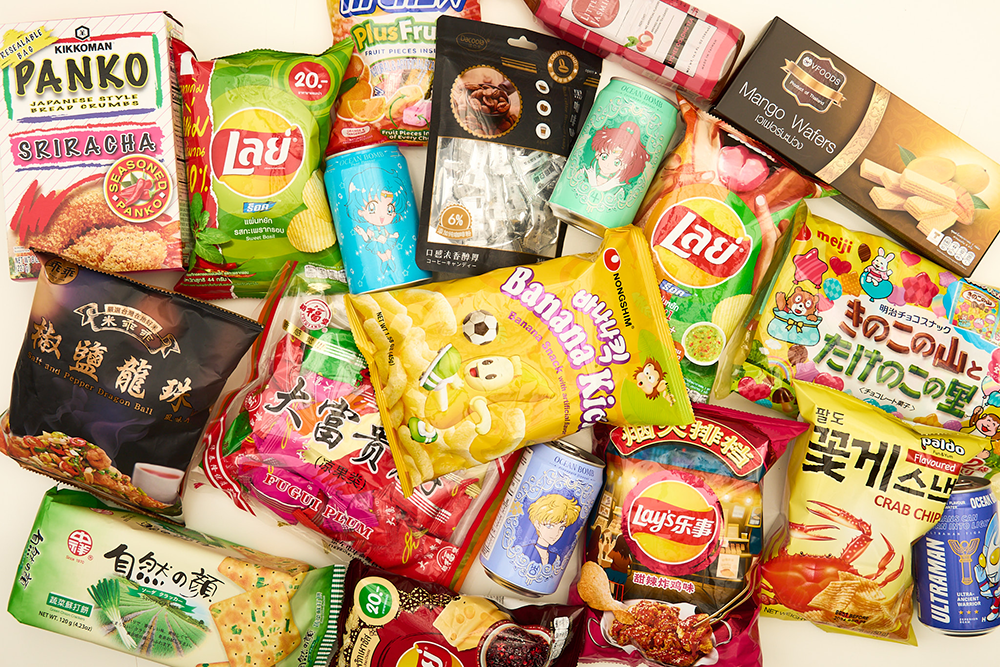
Our most recent visits to the Twin Cities own United Noodles and Asia Mall resulted in a luxurious stroll through THREE dedicated ramen aisles and an admirable stretch of frozen dumplings, plus a tantalizing haul of uniquely flavored waters and teas (Lychee!), palate-stirring salty snacks (crab-flavored Lay’s!, green onion crackers!), mango cookie wafers, jellied candies, dumpling sauce, beautifully dried Szechuan peppercorns, and hello…Sriracha panko!

When it comes to Asian grocery, we leave you with these recommendations if you have yet to experience it:

  • Visit at least one in your area for inspiration. Take mental notes on flavor, format, and even claims to inform Asian-inspired products.
  • Map out Asian demographic hotspots within your footprint and…
    • Identify Asian food distributors, considering both product innovation as well as existing product crossover appeal (hint: Asian grocery also carries brands recognizable from traditional channels)
    • Seek conversations with traditional retailers where your Asian-inspired brands are not yet in-store
  • Buy (and try) something new!

[1] “Don’t call It an ‘Ethnic’ Grocery Store,” The New York Times, 6/11/24
[2] “The PG 100: Ranking Top Food Retailers in North America,” Progressive Grocer, 5/16/22
[3] Hmart.com
[4] “The 2023 U.S. Asian Market Report,” Claritas, 2023
[5] Tastewise, 2024
[6] “How grocers are cashing in on a changing global food market,” Supermarket News, 9/12/23
[7] “Asian Supermarkets: Creating Their Own Strategic Niche & Well Positioned to Succeed Long Term,” Faris Lee Investments
[8] “Where to Buy Asian Groceries Online,” Bon Appétit, 1/13/23
[9] “A New Kind of Asian Grocer Has Arrived,” Saveur, 1/31/24

A Recap of Wall Street Journal’s Global Food Forum

Earlier this summer, we attended WSJ’s Global Food Forum. Hosted in Chicago over a densely packed two days, this event was unlike others we attended this year in its structure and tone. It brought together large-scale business leaders from across the industry to discuss and explore the major forces shaping food and agriculture—and being that it was orchestrated by the Wall Street Journal, it was quite to-the-point.

A Lot to Take In

With over 18 panels, two roundtable meals and numerous breakouts, the primary (and often heated) discussions at hand were:

  1. How do we make food more accessible and affordable?
  2. How do we ensure food is made with quality ingredients that provide optimal nutrition, while keeping the environment in mind?

The latter is an incredibly complex question that, in one form or another, was posed to nearly everyone in attendance. It seemed to leave little room for an “and” rather than an “or” response; I imagine it’s partially due to it being even more difficult to navigate.

Regenerative agriculture was by far the most discussed topic throughout the two days. Generally recognized as farming practices that align with better soil health, animal welfare and farmworker fairness, there is now a certification that ensures these practices meet a specific (and very high) standard: the Regenerative Organic Certification. While we predict this will be language that consumers of the future recognize, this is early adoption in mainstream food and beverage CPG. 

Highlights

McDonald’s President, Joe Erlinger, spoke of the hyped value menu that launched this week: a $5 meal deal in response to their customers’ demand for the price-value equation they have come to expect of the Golden Arches. From his POV, it’s looking to be wildly successful.

Bob’s Red Mill created a new oat that took decades to perfect and delivers 60% more protein than other oats as a plant-based option.

Lundberg Family Farms recently launched a Regenerative Organic Certified line-up in their portfolio of rice CPG products. Brita Lundberg, fourth-generation farmer and Chief Storyteller shared the family’s consistent dedication over nearly 100 years of farming in California to “leave the land better than you found it,” inspired by their ancestors. Lundberg Family Farms also launched a new campaign, “Ducking Good,” to raise awareness around regenerative agriculture. 

Worth a Visit

This is an event worth having on your radar and one that we’ll certainly attend in the coming years. If you’re interested in digging in further, reach out to weshouldtalk@jtmega.com. 

Lastly, if you’re local, consider checking out Naturally MN’s upcoming Minnesota’s Premier Regenerative Agriculture Conference 2024.

CLOSE